Interior Design Website Strategy to Attract Full-Service Clients
Table of Contents
If you’re an interior designer hoping to book more full-service projects but consistently filtering requests for a kitchen refresh or one-room consultation, there’s probably a disconnect between the work you want and the signals your website is sending.
Your website and portfolio are putting out signals, and what those signals are can either help or hurt you. If your site is filled with individual room reveals, lists smaller projects as core services, or leads with hourly or e-design pricing, you’re telling visitors that’s the kind of work you want, even if your actual goal is to book whole-home renovations and ground-up projects.
A strong interior design website strategy closes that gap. Your website should make the scope of your work clear, help prospective clients understand what full-service design actually involves, and give the right people confidence that you can handle a significant project from beginning to end.
Your Portfolio Matters
Designers know how important portfolios are, but the kind of things you’re showcasing matter just as much, if not more, as how beautiful and curated the photos are. If the majority of your portfolio features powder rooms, primary suites, and individual kitchens, that’s what a prospective client assumes you specialize in. You may have completed beautiful full-home projects, but if visitors have to dig to find them, those projects aren’t shaping the first impression.
This is one of those areas where less can actually do more. You don’t need to showcase every project you’ve completed. Lead with the full-home, new-build, and major renovation projects that represent the work you want more of. Within those projects, show enough of the home to communicate the full scope instead of treating each room like an isolated reveal.
The story you tell matters too. Rather than focusing only on the finished spaces, talk about how the home came together as a whole. Share the scope of the project, how you collaborated with the builder or architect, and how your decisions created a cohesive finished home. That context helps a prospective client see that you’re equipped for much more than selecting finishes for a single room.
Be Clear About Who Your Services Are For
It’s easy to assume that broader messaging will bring in more opportunities, but it often, unfortunately, does the opposite. Phrases like “we work with all budgets” or “projects of any size” may feel welcoming, but they also make it harder for a high-commitment client to recognize that you’re the specialist they need.
What it really comes down to is being willing to name the work you want. Your website copy should communicate whole-home design, new construction, major renovations, or whatever full-service means within your studio. Specificity gives the right client confidence and gives smaller-scope prospects the information they need to recognize when your services aren’t the right fit.
For some designers, that may mean removing one-room services from your website entirely. If you do continue offering smaller services, they shouldn’t receive equal positioning with full-service design.
Show Clients What Full-Service Actually Means
The process page is one of the most underused pages we see on interior designer websites, especially when the goal is attracting larger projects. Most homeowners don’t fully understand what full-service interior design includes. If your website doesn’t explain it clearly, they’ll fill in the gaps themselves, for better or for worse.
A strong process page shows them what working together looks like from beginning to end. It communicates the timeline, explains how you collaborate with builders and architects, defines what your team handles, and sets expectations for the client's role along the way.
That clarity builds trust, but it also filters. Someone who isn’t ready for the timeline, investment, or commitment involved in full-service design can recognize that before submitting an inquiry. Meanwhile, the client planning a significant project sees an organized process and a designer with the experience and capacity to guide it.
Find out what high end clients need to see before they reach out.
Your Homepage Sets the Scope
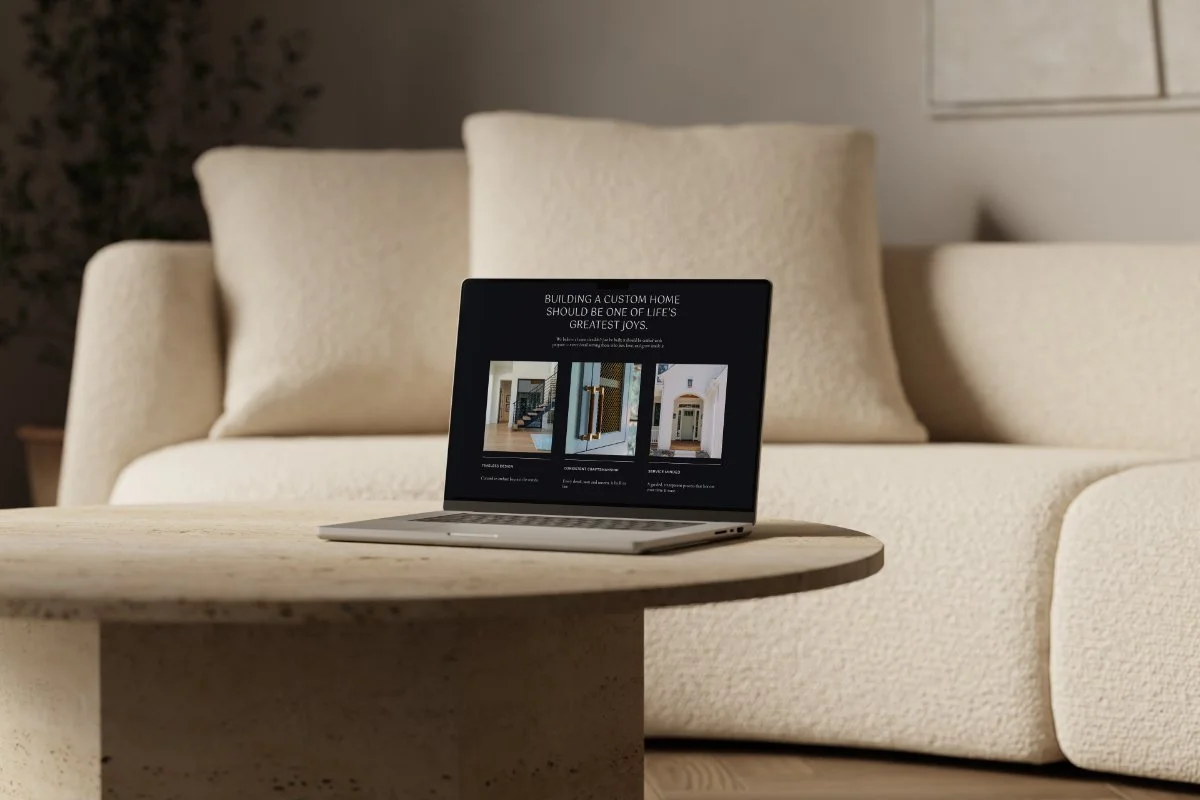
A prospective client shouldn’t have to explore five pages before realizing that you specialize in full-service design. Your homepage should establish that from the beginning.
Your hero image, headline, supporting copy, and first featured project all contribute to that impression. A full-home project paired with specific messaging about new construction or major renovations creates a very different expectation than a beautiful image accompanied by generic language about “timeless spaces.”
Make Your Inquiry Form Part of the Strategy
Once the rest of the website has established your positioning, your inquiry form can help with the final layer of prequalification. Instead of asking only for basic contact information, include fields that give you meaningful context about the project. Project type, investment range, location, and timeline can tell you a lot before the first conversation. The way you structure the options matters too. It may sound obvious, but if you don’t want one-room projects, something as simple as not including “single room” as a project type can help tremendously.
The same applies to investment ranges. Your form can set expectations about the level of project you take on without making the experience feel intimidating. By the time someone reaches this page, your website should have already communicated the caliber and scope of your services. The form simply reinforces what they’ve already learned.
Fewer Inquiries Can Be a Sign That It’s Working
This is often the hardest part of repositioning toward full-service work. You may start getting fewer inquiries, but we want you to remember that more inquiries isn’t the goal. If your website used to generate ten inquiries a month and most were for one-room projects, getting five inquiries from people planning whole-home renovations or new builds is a much better outcome. The right leads are more important than more leads.
You’ll also start noticing changes in the conversations themselves. Prospective clients may come in asking about your process, timeline, and how you collaborate with their builder or architect instead of asking how much you charge to refresh a room. Builders and architects may also feel more confident referring clients because your online presence finally reflects the level of work they already know you can do.
At the end of the day, your website can’t say you’re a full-service interior designer while also signaling that you’re available for anything. Your messaging, portfolio, process, services, and inquiry experience all need to tell the same story.
When they do, the right client can recognize exactly what you do and feel confident that you’re equipped to guide a project of their size and complexity. That’s what a strong interior design website strategy should accomplish. If your website isn’t reflecting the scope of work you want to attract, Schedule a Discovery Call.