
In This Post
If you’re investing in marketing for your home builder business through Search Engine Optimization, social media, paid ads, or networking, you’re already doing the work to get your brand in front of potential clients. That visibility matters, but showing up in search results is only part of the equation.
There’s an important question many builders overlook: What happens once someone lands on your website? Because if your website isn’t converting visitors into the right inquiries, you’re losing opportunity.
As a designer who specializes in custom websites for home builders, I often see builders driving traffic to sites that simply aren’t built to convert. And when that happens, all of the effort and money spent on marketing ends up funneling into a website that isn’t doing its job.
When Traffic Doesn’t Turn Into Leads
One of the first things I look at when evaluating a builder’s website is the conversion rates: the percentage of website visitors who actually submit an inquiry. While, of course, conversion rates can vary based on goals (form submissions, free resource downloads, and calls scheduled can all be helpful metrics) inquiries are still one of the best ways to measure what’s working and what’s not.
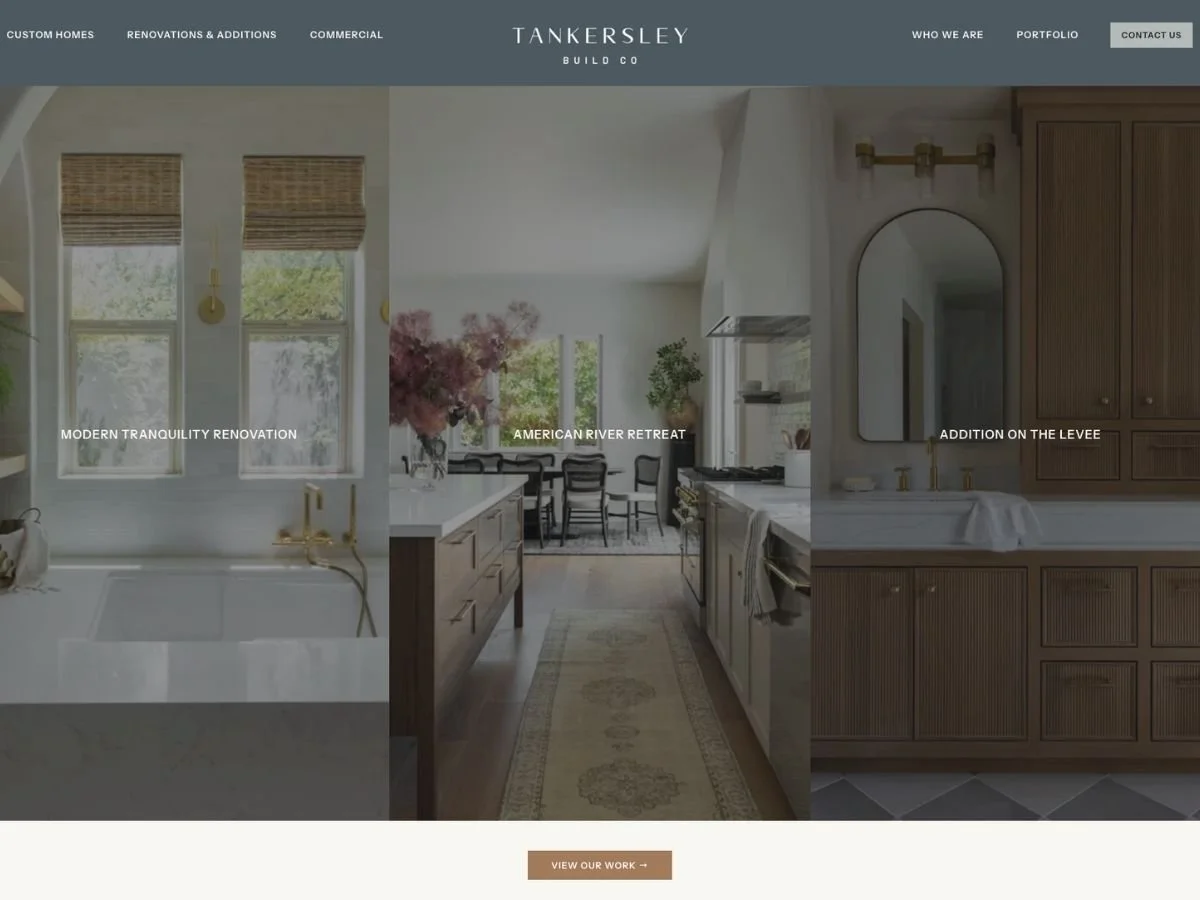
For builders and designers, a healthy website should typically convert around 3–5% of visitors into leads. If the lead generation number is significantly lower, it usually means the website isn’t clearly guiding visitors toward taking the next step.
The Hidden Cost of Unclear Messaging
Another common issue I see is a lack of clarity around the ideal client or project type.
Many builder websites list a long menu of services (kitchens, bathrooms, decks, additions, and everything in between) even when the builder would prefer to focus on custom homes or larger renovations. When the messaging is broad, the leads will be broad too.
Over time, this creates a costly cycle. Builders spend time answering calls, scheduling consultations, and preparing estimates for projects that aren’t the right fit. That time could be spent pursuing the types of projects that actually move the business forward.
Clear messaging helps your website act as both a magnet and a filter, attracting the right projects while discouraging the wrong ones.
Why Branding Alignment Matters
Brand perception plays a bigger role than many builders realize.
Many of my custom home builder clients tell me they want fewer projects each year with larger budgets and higher-end clients. But if the website's visuals, messaging, and portfolio presentation feel entry-level or overly broad, the site will naturally attract lower-budget inquiries rather than those seeking to build luxury homes.
Everything on your website, from the projects you feature to the way you describe your services, should reinforce the type of work you want more of.
Even small strategic details can make a difference. For example, an optimized inquiry form that includes budget ranges allows potential clients to pre-qualify themselves before reaching out. That simple step alone can significantly improve the quality of leads coming through.
Need new photos? Read this blog first!

Free Guide: The 10 Things Every Home Builder Website Needs
Download the free guide and apply simple website strategies to land more projects and become the go-to builder in your area this year!
Small Issues That Cost Builders Leads
Sometimes the biggest problems are surprisingly simple.
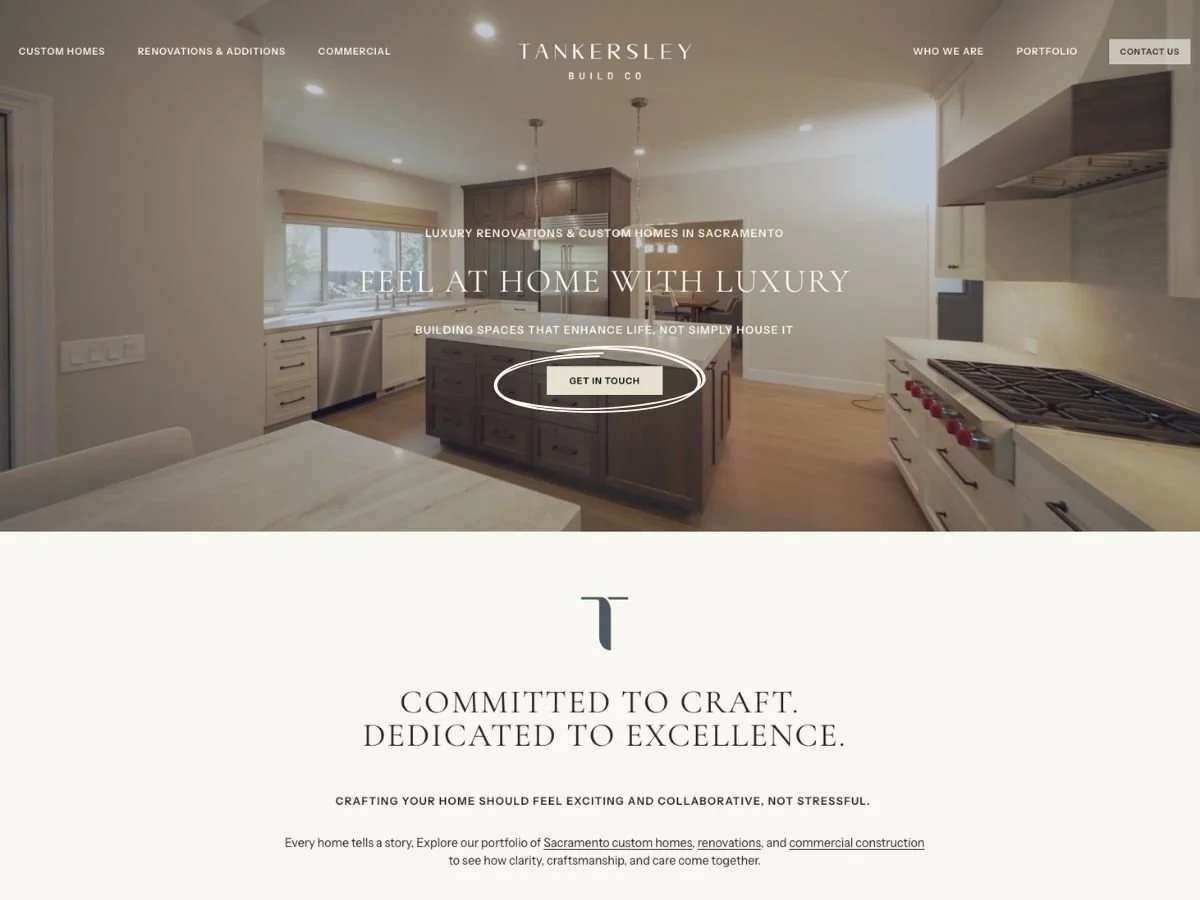
Website design with too many navigation links often overwhelms visitors, making it harder for them to find what they’re looking for. User-friendly websites are a must.
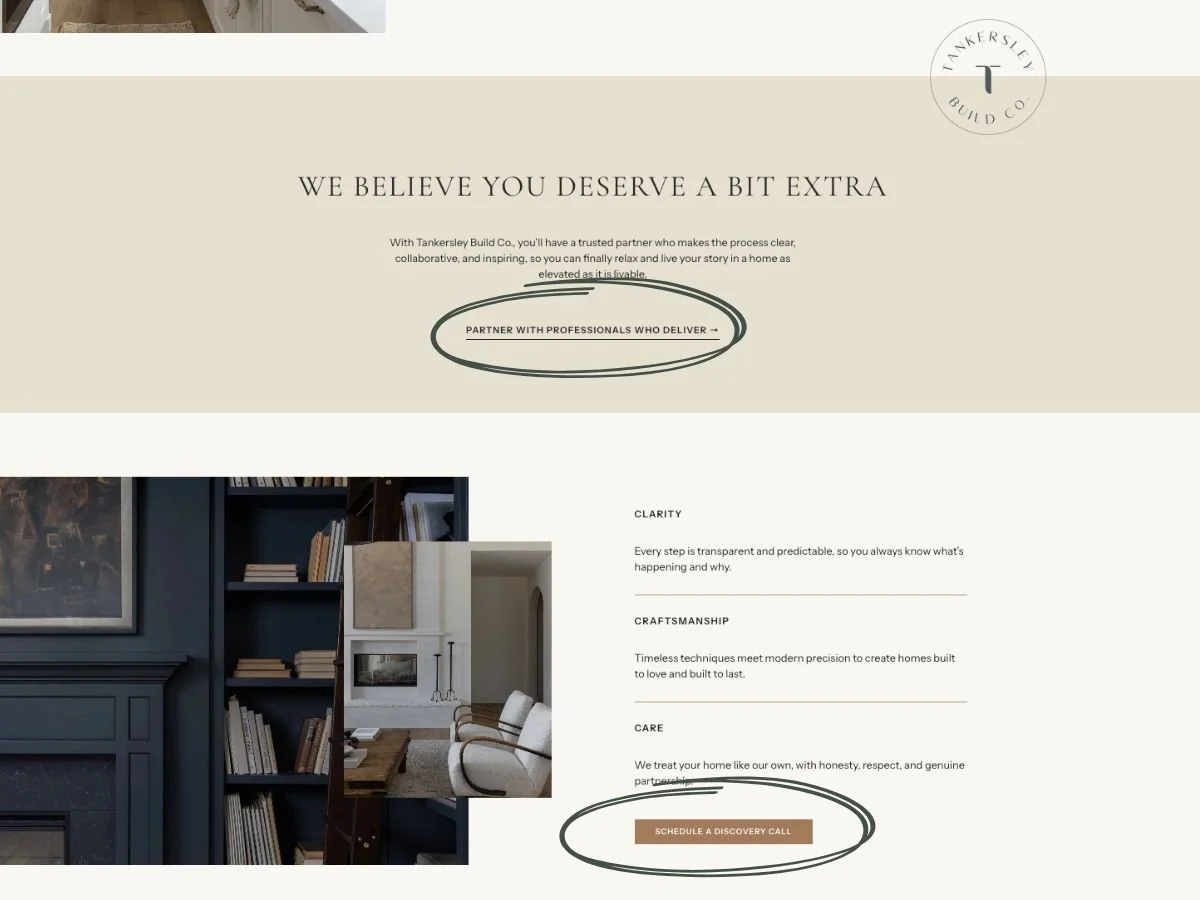
A lack of clear calls to action is another common issue. If visitors aren’t sure where to click or how to reach out, they’re far less likely to take action.
Trust is also essential. Hiring a builder is a major investment, and most clients need reassurance before they inquire. Beautiful project photos and portfolio displays help, but they aren’t enough on their own. Visitors also want to understand your process, see proof of past results, and feel confident that they’re choosing the right team for their home-building journey.
Without those trust-building elements, even interested visitors may leave the site without reaching out.
Turning Your Website Into a Strategic Asset
When I start working with a builder on a custom website project, the first step is always to understand their goals: what types of projects they want to attract, who their ideal client is, and where they want the business to grow next.
From there, we look at website analytics, messaging alignment, and the overall user journey to identify where opportunity is being lost.
A well-built website does far more than showcase your work. It builds trust, clarifies your services, and guides the right clients toward reaching out. That’s especially true for mobile-optimized websites, which help ensure the client experience feels seamless from the very first click.
That’s the real advantage of investing in one of our custom websites for custom home builders. When your website is built strategically, it becomes one of the most powerful tools in your marketing ecosystem, helping you attract better projects, better clients, and stronger long-term growth. You don't need a huge digital presence, but you do need a website that turns interest into trust and trust into qualified inquiries.

Make your website lead with strategy to attract new clients and skyrocket sales!
Looking for a custom home builder site that works just as hard as you do? Let’s talk! I love helping construction industry businesses create effective, strategic custom websites that bring in new business.