In This Post
When builders think about updating their website, many start with aesthetics. They refresh outdated branding or layouts that no longer reflect the quality of their work. Rarely do they go the extra step to question whether the website is effectively doing its job. For builders investing heavily in marketing, focusing on website strategy rather than just a refresh can significantly impact their success.
Recently, I was a guest on the Brad Leavitt Podcast and walked through the perfect example of why website strategy matters. During our initial conversation, we found that AFT’s website was generating leads, but many of those leads were not aligned with the projects the company wanted to pursue in the long term. Luckily, here at Katlyn Slocum Design, we know just how to solve that problem.

The Problem Was Not a Lack of Leads
AFT Construction was not struggling with visibility before the rebuild. The company already held strong industry recognition and consistently received inquiries. The challenge was that many inquiries did not fit the business model or the type of work the team wanted to do.
Instead of attracting luxury residential projects, the site allowed a wide range of smaller or misaligned inquiries. This meant valuable time was spent sorting through requests outside the company’s scope, budget expectations, or operational structure.
Many builders face this challenge without realizing their website contributes to it. A website that lacks clarity, positioning, or intentional structure often creates internal friction, requiring the team to manually filter every lead afterward.
A Website Strategy That Works
A major misconception in the building industry is equating a website refresh with a website strategy. A refresh focuses on visual updates, while strategy focuses on performance, such as lead generation and user engagement.
For AFT, website strategy meant designing a site that actively supported business goals rather than merely functioning as an online portfolio. The rebuild centered around several key objectives:
Clearly positioning AFT within the luxury residential market
Simplifying navigation to reduce decision fatigue
Creating clearer calls to action throughout the site
Making the contact process more accessible
Introducing lead filters, such as minimum square footage requirements
Curating the portfolio to reflect the type of work the company wanted more of
Adding trust-building elements like process pages and FAQs
Creating additional conversion opportunities beyond a contact form, including lead magnets and email list growth
We didn’t want to generate more traffic for its own sake, but to create a website that better qualified visitors before the first conversation ever happened.

Free Guide: The 10 Things Every Home Builder Website Needs
Download the free guide and apply simple website strategies to land more projects and become the go-to builder in your area this year!
The Importance of Data and Conversion Tracking
Builders often invest heavily in getting potential clients to their site via SEO, social media, advertising, and networking, but most don’t know how their website performs once users arrive.
Without tracking an intentional conversion strategy, it becomes difficult to know where leads are coming from, which marketing efforts are working, whether visitors are taking action, and which parts of the website are causing drop-off.
For AFT, tracking included:
Website traffic and session volume
Conversion rates tied to business goals
Lead source visibility through analytics platforms
Inquiry form questions asking how prospects found the company
Fewer Leads, Better Leads
Post-rebuild, AFT saw a decrease in lead volume, but the leads coming through the website were significantly more aligned with the projects AFT wanted to pursue. Prospects arrived with clearer expectations, a better understanding of the company’s positioning, and stronger alignment with project scope and budget: “"Leads came drastically down... but the ones that were always filtered through were the actual ones that got my email call back. From a business development backlog perspective, it didn't change — if anything got better." – Brad.
This led to an internal operational shift, as the team spent less time filtering out unqualified inquiries and more time focusing on meaningful opportunities.
Brad from AFT described it as removing “business development backlog noise.” Instead of constantly sorting through projects that were not a fit, the website itself began doing some of that work upfront. That’s the power of strategic website design.

Curating the Work You Want More Of
Many builders feel pressured to showcase every completed project, but that can actually dilute the brand and confuse potential clients. Instead, builders should showcase the work they want more of, not just everything they've done.
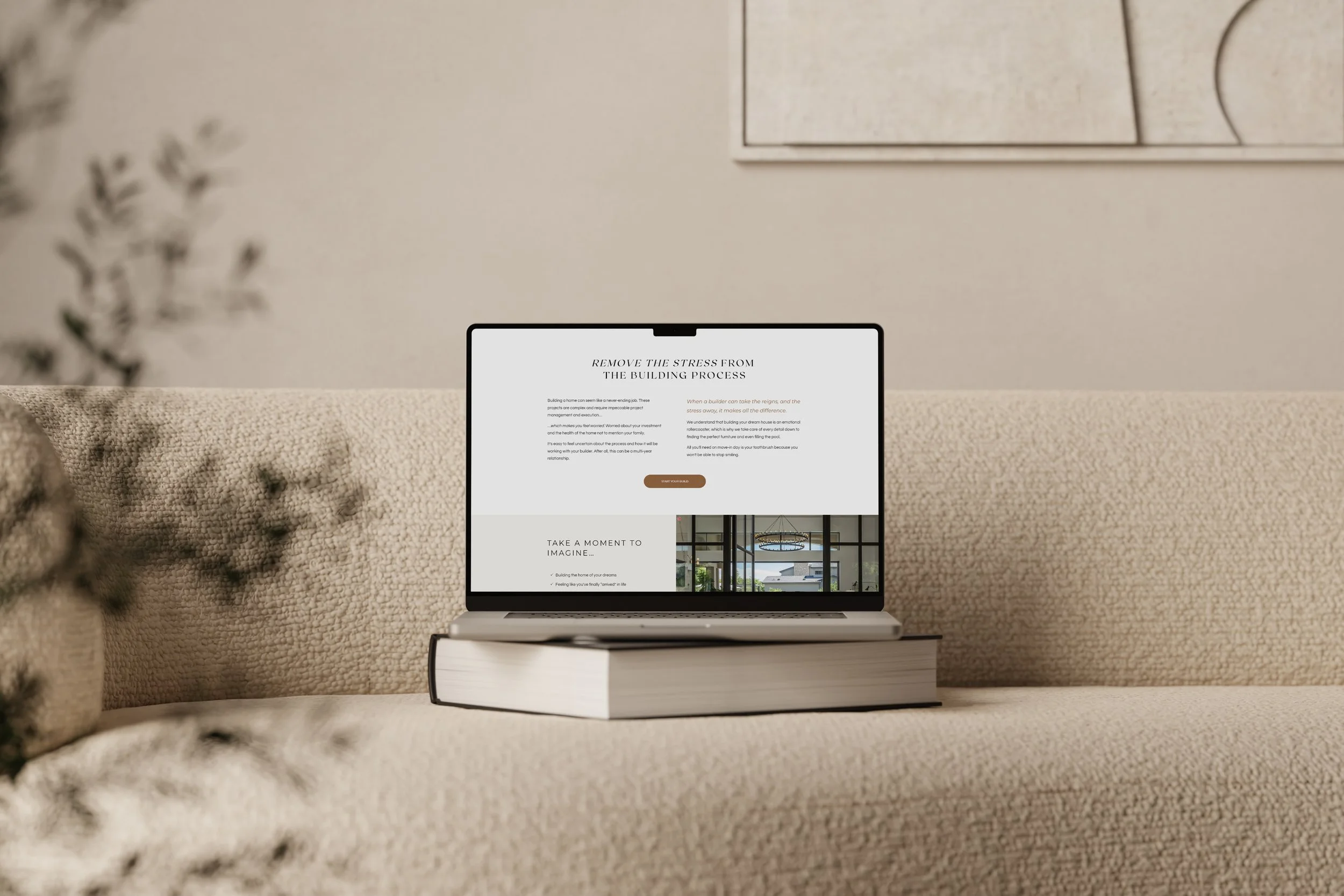
For AFT, simplifying and curating the portfolio reinforced the company’s focus on luxury residential work. Instead of overwhelming visitors with too many projects, we structured the site to highlight a smaller number of strong, strategically selected examples. In fact, a year or so later we actually removed even more projects, cutting about ten old remodels as he is no longer focused on renovations. Sometimes, removing rather than adding to your website is the change you actually need.
Interested in learning what every builder website needs? This blog can help!
Why Website Strategy Matters More Than Ever
For builders investing in visibility and marketing, your website often serves as the deciding factor between wasted traffic and qualified opportunities.
The AFT Construction project demonstrates that the most successful websites are the ones built with clarity, intentionality, and strategy from the start. At Katlyn Slocum Design, we build platforms that help businesses communicate more clearly, attract the right clients, and support long-term growth in a measurable way.
Want to hear the full conversation between Katlyn Slocum and Brad Leavitt on the Brad Leavitt Podcast? Check it out below!

Need a custom home builder website that works as a strong source of lead generation? Let's talk!
I work with custom home builders and renovation companies to design strategic websites that are effective in turning website browsers into buyers. Let's chat about what a custom website can do for your business on a free 30-minute consultation today!